
I used to be in awe of great public speakers who captivate thousands with their confidence. People like Steve Jobs and Tony Robbins, among many others, impressed me. This skill is admirable, yet it can cause anticipatory anxiety in many of us.
When I first gave talks back in 2018, the talk itself wasn’t the problem. Once you get going, and as long as you’ve prepared, you get in the flow. Additionally, it was the days before it, the knotted stomach and the anticipatory anxiety about what was to come.
That gap between now and the thing is where anticipatory anxiety lives, and it usually has very little to do with the event itself. The speech lasts four minutes, the meeting lasts an hour, and the fortnight in front of it can take over everything.
What Is Actually Being Rehearsed
There is a difference between preparing and rehearsing, and anticipatory anxiety is nearly always the second one.
Preparation is work on the content. Going over your notes, ordering your points, deciding what to cut. What the anxious mind does instead is simulate the room; the faces, the silence, the moment your voice goes. The purpose of that simulation is not to improve the talk, it is to find out whether you will cope.
That question can never be answered in advance, which is precisely why the mind keeps asking it. Each loop produces the physical sensations that would come with the real thing, the stomach, the shallow breathing, the raised heart rate, and those sensations then create a story that loops on repeat. That is the loop of doom, and it runs on repeat until you learn to identify, observe and step out of it.
By the time the event comes around you have been through it thirty or forty times already, and you get there tired, having spent a fortnight of energy on something that took four minutes.
Where It Starts
None of this begins with the meeting or the speech.
When I take a journey back through a client’s timeline with them, there is usually an earlier experience sitting underneath it, and it nearly always involves a moment that went wrong in front of other people. A reading in assembly that fell apart, or an answer given in class that the rest of the room laughed at.
What gets remembered isn’t really the mistake, it’s the being watched while it happened. That experience, and the story carried about it ever since, something along the lines of I can’t be trusted in front of people, gets stored in the subconscious as a little piece of software that runs on its own, without ever stopping to ask your permission first.
So when the next event appears in the diary, the subconscious does the job it was built for. It was given evidence once that being in front of people is dangerous, and it now works to keep you away from it, or failing that, to have you thoroughly rehearsed before you go anywhere near it.
There were two epiphanies I had that got me through my own anticipatory anxiety, they were quite logical realisations that centred around acceptance and letting go.
To Get Better at the Thing, You Have to Do the Thing
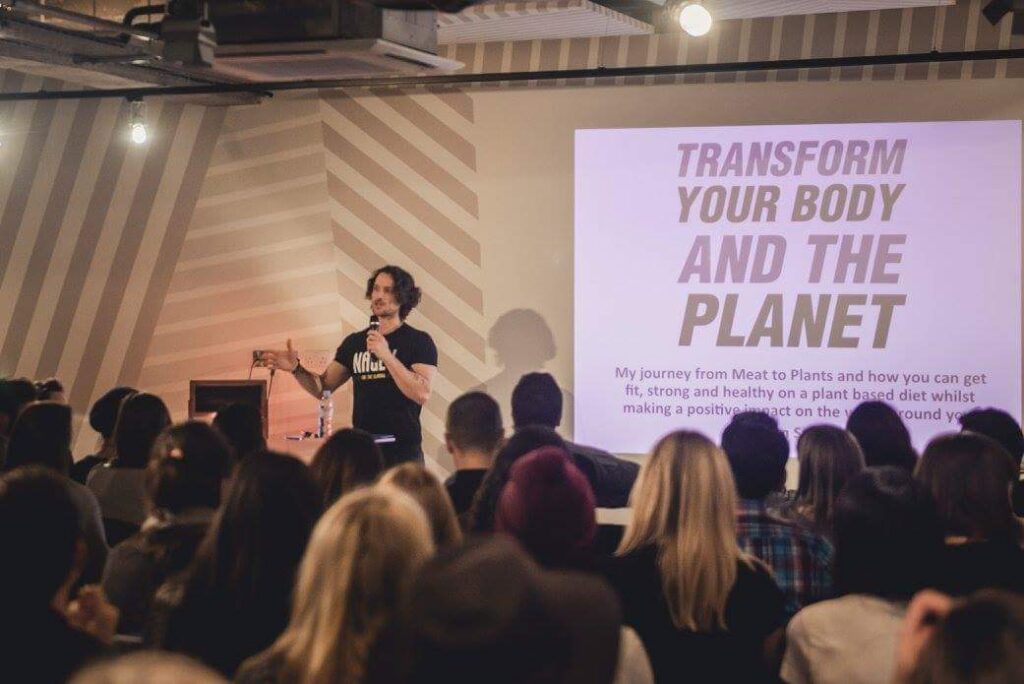
I realised that the only way I was going to improve my public speaking was by actually public speaking, so the first job was acceptance; so I said yes to every opportunity before the mind had a chance to say no.
That window between being asked and answering is very small, and it is the only moment when the decision is truly yours. After that, the subconscious will get involved and start thinking of all kinds of reasons why you should cancel.
This concept is highlighted by a great book and title called *Feel The Fear and Do It Anyway* by Susan Jeffers. The more we lean into our fears rather than running from them, the easier they become.
There is a clinical reason it works, and it is the same reason avoidance is so expensive. Every time you avoid the thing, the subconscious receives confirmation that it was right to be frightened, and the pattern strengthens. Every time you do it and come out the other side, it receives the opposite.
The list of avoidant activities builds quietly over years. The presentation handed to a colleague who is better at that sort of thing. The meeting attended with the camera off. The toast at the wedding politely declined. None of them feel like much on their own, and together they are how a life gets smaller.
Reframe the Feeling
The second epiphany took longer, and it is the one that really shifted my perspective, and allowed me to start enjoying the speaking.
Much of the focus in hypnotherapy and other forms of behavioural therapy such as CBT is to reframe the belief you have around what’s called the activating event, which then changes the emotional consequences you experience. The event itself does not change. The meeting is still on Thursday. What changes is the meaning attached to the feeling that comes with it.
Long before I learned hypnotherapy and counselling I instinctively started to reframe my perception of that uncomfortable feeling before an event, as a sign of great opportunity and personal growth. Over time that feeling which had filled me with dread became a signal to me that I was about to uplevel and improve the opportunities that would come into my life because of it.
“The feeling still existed but my relationship to it changed.”
Life is all about stories, specifically the stories we tell ourselves, about who we are, how the world sees us and what might happen to us if we stand up in front of lots of people and open our mouths. Deciding to tell yourself a new story is not an easy task when the old one is so powerful, but when we practice with consistency telling ourselves a new story, our relationship to the experience starts to change.
The more I practised saying yes despite the nerves, the more I realised that my fear was not a barrier but an invitation to improve.
Something You Can Use This Week
Try this: next time that feeling comes before a meeting or a presentation, don’t try to get rid of it. First accept it and allow it in. Then say to yourself out loud…
“Who knows what great opportunity could come from this experience, this experience will make me even better and how lucky am I that people want to hear what I have to say.”
Out loud matters. Said in your head it becomes one more thought among all the others, whereas said aloud it interrupts the rehearsal that was already running underneath it.
Declare it to yourself and the world!
It will feel ridiculous the first few times. Do it anyway, because you are not trying to convince yourself of anything in that moment, you are giving the sensation a different instruction to follow, and with repetition that instruction is the one that starts to run.
Where Hypnotherapy Comes Into It
Reframing on your own is possible, I did it before I trained in any of this, and it works on the thinking.
What it doesn’t go near is where the pattern came from. Hypnosis works at the subconscious level, which is where the original experience and the story attached to it are stored. It returns to that point and gently separates the two, updating a program installed a long time ago, usually by somebody quite young with nobody there to explain what had just happened to them.
By offering clients tools, techniques and insight, they can experience immediate relief to their symptoms, whilst we do the deeper work on the sub-conscious, where the story originated.
The aim is a change in what the feeling means to you, so that the same sensation reads as a sign that this matters, rather than as a warning to get out.
Nobody is asking you to become Tony Robbins. Most of the people I see want to get through a Monday meeting without losing the weekend in front of it, and that is a reasonable thing to want.
If the days before every event have been costing you more than the event itself, then the thing worth looking at isn’t the meeting or the speech at all, it’s what you learnt a long time ago about being in front of people.
Break The Anxiety Loop
Learning a way to reframe your perspective is one of the things we go through in my workshop, along with the loop that keeps the first story running.
Live every Monday evening, for 60 minutes, £20, online, and the replay along with the 10-minute guided meditation audio is sent to you the following morning, so you can rewatch it in your own time and turn insight into embodiment.







One Response