Most clients I see in my practice relating to health anxiety know exactly when it started; the week their daughter was born, the night they ended up in A&E with nobody able to tell them what was wrong, the morning somebody was sick on a train carriage they couldn’t get off.
Those experiences are usually triggers that intensify an underlying problem that has been there for years, which was embedded a long time ago.
These conditions are often unrelated to illness itself, which is why the soothing advice and support from health professionals, partners and friends, makes little difference to how they are feeling.
It Begins with the Body
When I take a journey back through a clients timeline with them, there is usually a past experience relating to the body losing control of its functions, in front of other people, usually in childhood or adolescence. A child whose body let them down in a classroom and who was then moved to sit away from everybody else because of it, or a teenager who was sick somewhere in public and spent the following weeks being reminded about it by everybody who saw.
What they remember isn’t really the symptom, it’s the being looked at, the being separated out, the sense of having become the one that everybody else was suddenly a little wary of, and it arrives with shame attached to it, and it’s the shame that keeps it in place.
So, the experience, physical symptoms, story, and shame all become bound up together and sit there waiting to be set off later down the road.
The Control Room
The subconscious is the control room, in charge of all the autonomic thoughts, beliefs and behaviours running in the background like little software programs, the ones you aren’t consciously aware of but that shapes how you perceive people, places and things.
A horrible afternoon in front of the whole class installs one of those programs, and what gets installed alongside it is the story carried about it ever since, something along the lines of my body can humiliate me in front of everybody and there is nothing I can do to stop it. That story is the direct reason the anxiety exists at all, and because of where it’s stored, it runs on its own without ever stopping to ask your permission first.
In this moment trust for the innate occurrence of bodily sensations as innocent signals is lost, and instead they become a sign for looming catastrophe.
Then Somebody Starts Depending on You
Years later something happens, and what has been fairly dormant and quietly manageable for most of your life, starts raising its ugly head.
It seems to happen frequently when an individual becomes responsible for somebody who can’t look after themselves, and most often that somebody is a child, though it isn’t always, sometimes it’s an elderly parent with nobody else, and sometimes it’s a period of loss or collapse in adult life that leaves a person with far less resilience than they once had. Suddenly the cost of falling ill becomes too great and the mind moves into survival mode, trying to manage and foresee any eventuality that might affect their health.
Which is why, when you get beneath it, they are not really afraid of their own health but the impact that a reduction in their health and capacity would have on those around them, such as becoming ill or passing away and leaving someone they love to cope without them.
Then usually an unforeseen event sets it off, somebody being sick in the same room, or a child’s trip to hospital, or a test result that took a fortnight to come back, something small enough that anybody else would have forgotten about it by the following weekend, except that it triggers this old underlying fear response, bringing back to the surface with it the past emotions, feelings and stories.
What the Watching Is Really For
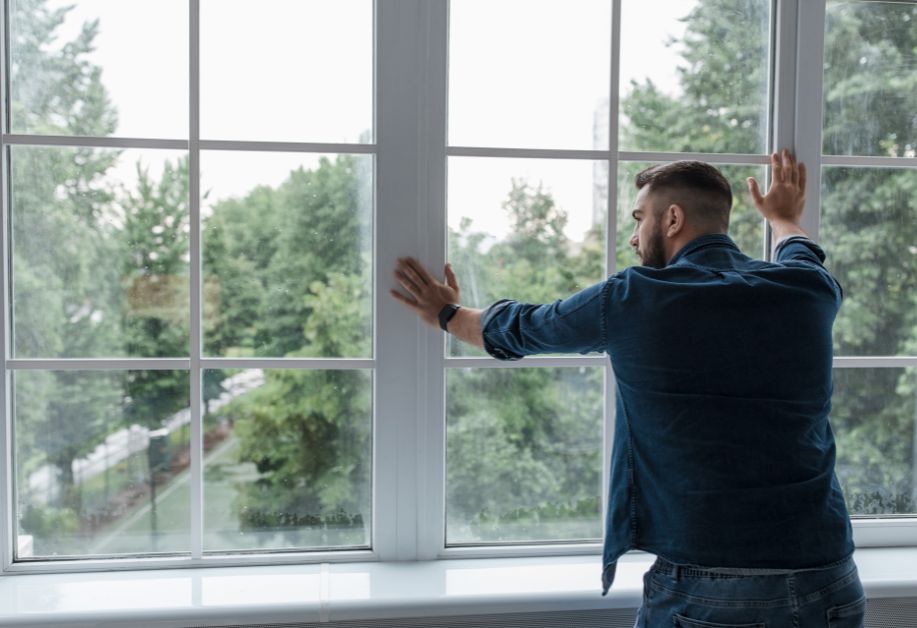
From there the hypervigilance goes outwards rather than inwards, not so much onto your own symptoms as onto everything else, germs, crowded places, who’s showing signs of being unwell, what’s going round at school, what the children have been near, the hand washing, the plans quietly cancelled, always calculating the risk in the most innocent of normal everyday circumstances.
To others it can look like overreacting, but from the inside control room, it is someone’s subconscious mind going into full on future prediction mode, in order to keep everyone safe.
The list of avoidant activities, is remarkably consistent, eating out, public transport, crowds, and anywhere that getting up and leaving quickly would be difficult or obvious, and where, if your body did something you couldn’t control, you could neither hide it nor get away from it.
Then the thinking gets hold of it:
What if I catch something…
What if I pass it on to them…
What if this is the start of something…
The “what if” can never be answered, which is precisely why the mind keeps asking it. The thought triggers a physical sensation, which creates a story; the story intensifies the thought and feeling, reinforcing itself until the loop continues long after the event has passed. With every circuit, the pattern becomes more deeply embedded. That is the loop of doom, and I see it beneath nearly every anxiety I work with.
Emetophobia, and why it makes sense.
Often, the anxiety narrows to one specific fear. I increasingly see clients with emetophobia: a fear of vomiting.
This makes complete sense once you understand what lies beneath it. Vomiting is a sudden, uncontrollable way for the body to let you down, whether in front of people you are meant to care for or strangers in public. It can happen without warning and cannot be stopped once it begins.
Emetophobia is often described as a fear of illness. In my experience, however, it is closer to a fear of visibly losing control of the body; many clients say that vomiting itself does not frighten them.
Where Hypnotherapy Comes into It
Hypervigilance is a visible symptom, but it is not the source of the problem. I start by looking at your relationship with your body; your sense of safety and your trust in its ability to produce normal, natural signals.
By offering clients tools, techniques and insight, they can experience immediate relief to their symptoms, whilst we do the deeper work on the sub-conscious control room, where the story originated.
Hypnosis works at this subconscious level. It returns to where trust was first broken and gently separates the experience from the story attached to it, updating a program installed long ago by a frightened child with nobody there to explain what had happened.
The aim is to help you notice a sensation in your body without assuming it means something is wrong, helping you to regain trust in body’s natural signals.
Coming Back into Your Senses
There’s also something you can use today, on your own and without any help from me. It won’t change the origin of the problem, which requires deeper work, but it will give you something to actually do when the spiral starts, so that you can step out of it before it spirals out of control.
Try this: Bring your attention back into your senses, your feet on the floor, the temperature of the air on your face, whatever you can hear in the room at this moment including the sounds you’d normally filter out, and whatever is genuinely in front of you rather than the movie your mind is playing about your dinner time or next weekend.
It may sound too simple for a problem that has lasted years, but it works because the spiral depends on your attention. Since attention can only be in one place at a time, bringing it back to your senses briefly deprives the loop of fuel. With practice, this new focus becomes stronger and easier to direct.
If you’ve spent years searching your body for the answer, and years being told by everybody that there’s nothing wrong with it, then stop searching there, because the thing that needs looking at isn’t in your body at all, it’s in what you learnt about your body a very long time ago.
Break The Anxiety Loop
The loop is what my workshop helps to unpack, why it keeps starting and how to start breaking it.
Live every Monday evening, for 60 minutes, £20, online, and the replay along with the 10-minute guided meditation audio is sent to you the following morning, so you can rewatch it in your own time and turn insight into embodiment.
Here’s the link if you’re ready.